
You can pick up a copy of the Tree Walk Map from Talking Tree during the festival, or download a copy here. Follow the map to visit some of the wonderful trees that we have around Staines upon Thames. The Guide below identifies each tree and gives a little information about it. At the end of the guide there are links to other sources of information.
The full walk will take approximately one hour, but we encourage you to linger by each tree, looking at it carefully, its bark, its branches and leaves. Consider what is beneath your feet as you stand by the tree. A huge network of roots spreading out to take up water and nutrients from the soil, but also providing foundations strong enough to support massive trunks and spreading branches.
1. Mulberry

The Black Mulberry is native to south-west Asia and was probably introduced to the U.K. around 1500 and cultivated for its edible fruit .
2. Lime
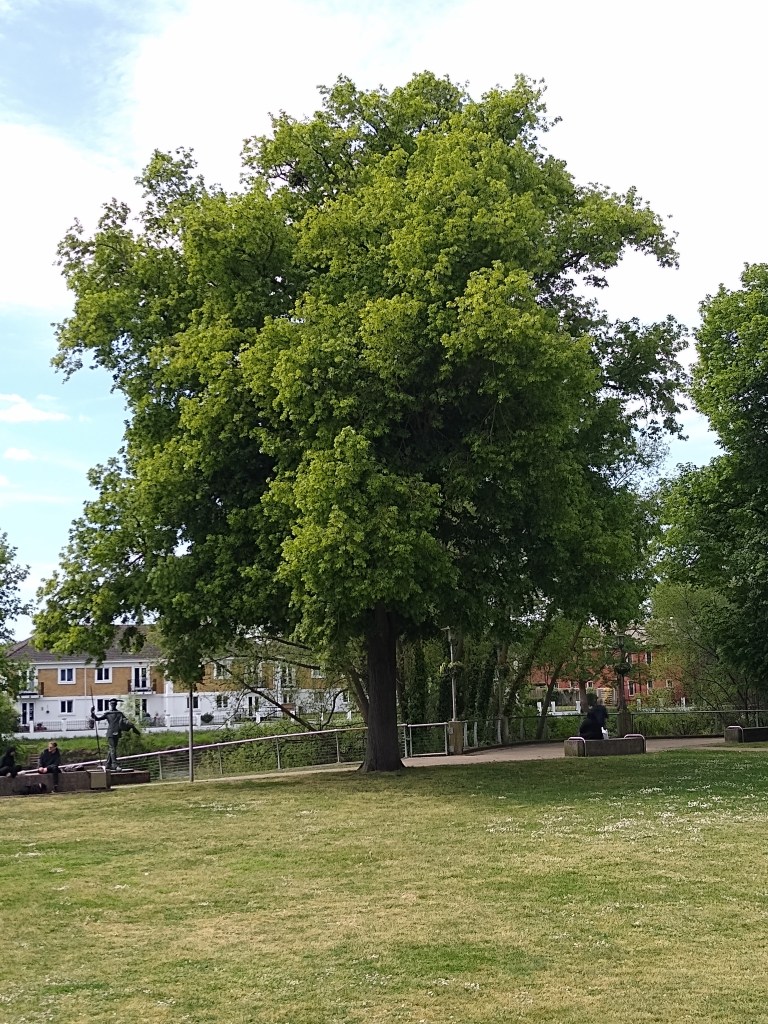
Lime trees do not produce the citrus fruits we know as limes. The word lime, as used for trees in Britain is believed to come from the Old English word ‘lind’. The wood is soft and light, white-yellow and finely textured. It is easy to work and often used in wood turning, carving and furniture making.
3. Cedar of Lebanon
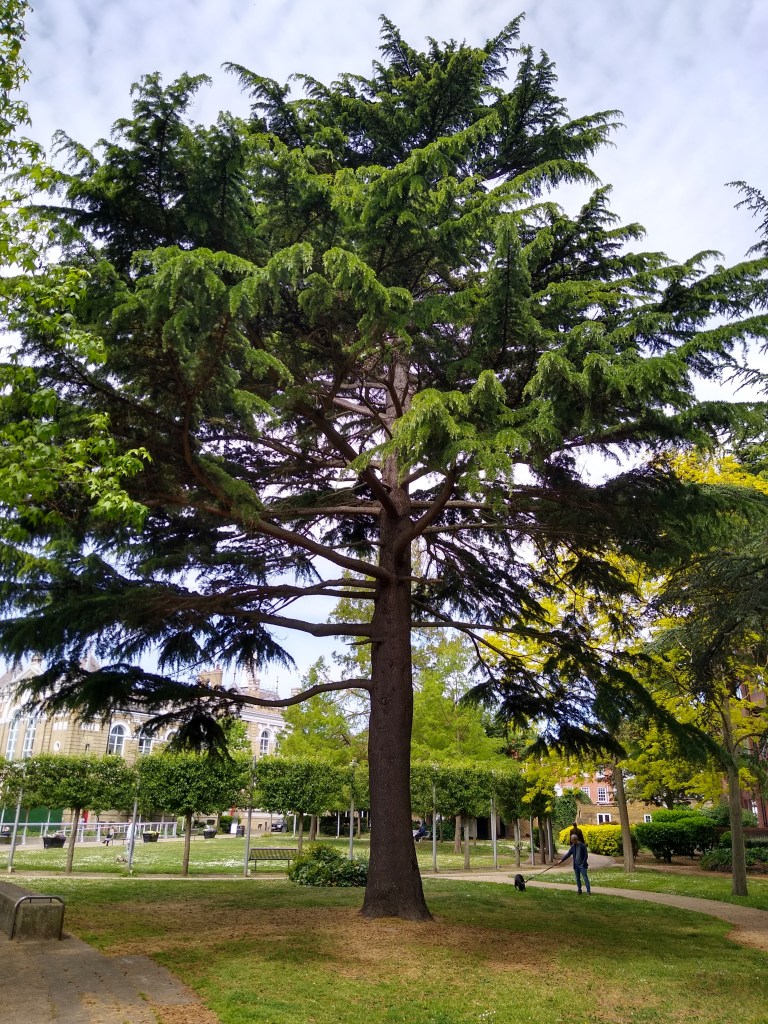
This majestic conifer is a Cedar of Lebanon. Native to Lebanon, Syria and south east Turkey, it was introduced to Britain in the 17th century and has since been planted throughout the country in formal gardens, estates, churchyards and parks. Its flat branch-ends make it easy to identify.
4. Larch
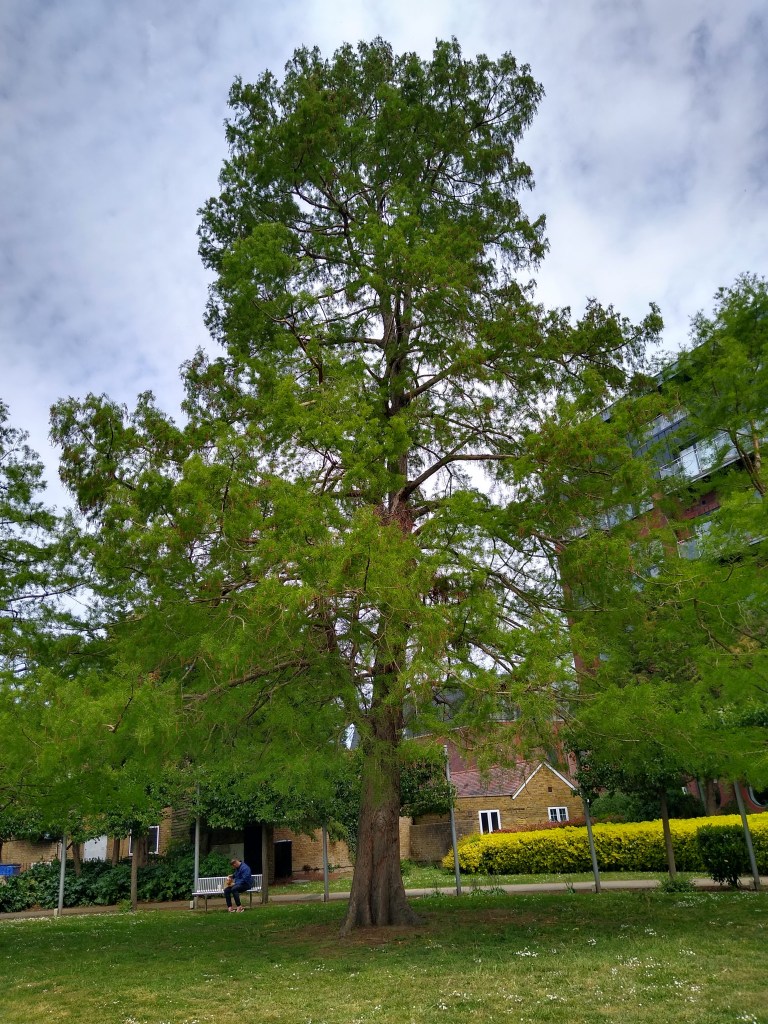
The European Larch is a conifer native to the Alps and Central Europe. It was introduced to Britain about 1620. The tree is now common and grown for timber as well as its appearance. This is a deciduous conifer. Its leaves turn a stunning gold colour before falling in autumn and regrowing from April.
5. Silver Birch
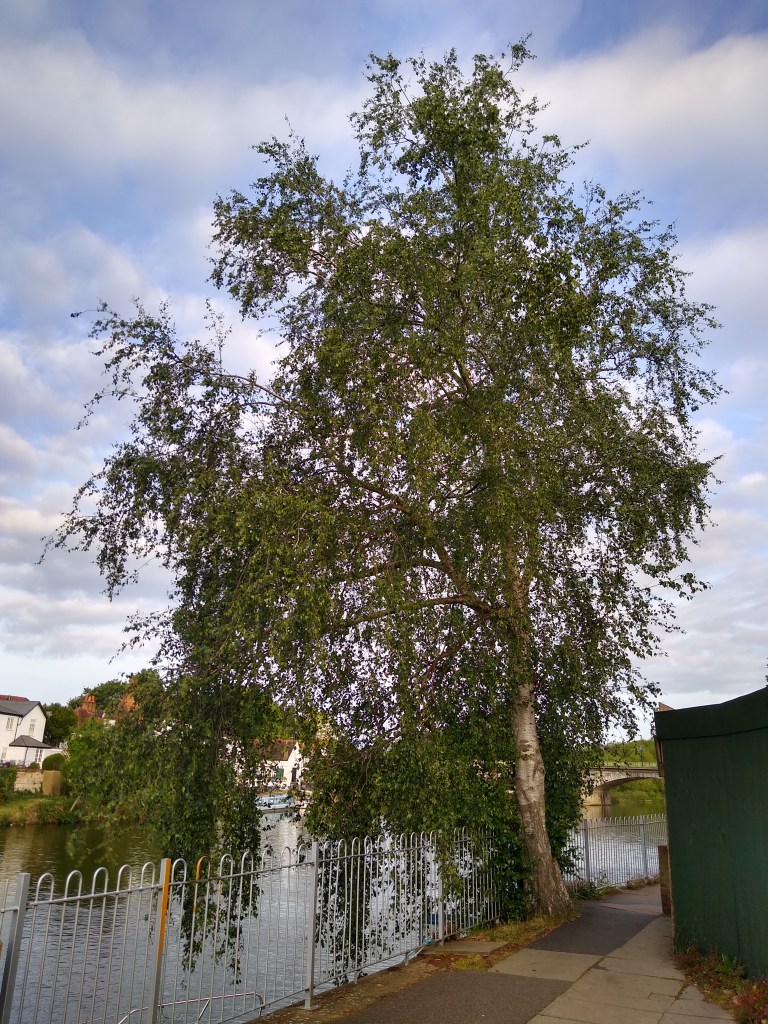
The Silver Birch is widespread in Britain, occurring naturally as well as beiing planted extensively in urban areas as an ornamental tree. It has flowers in the form of catkins. Male birch catkins hang down in April and May and release pollen onto the wind. The female flowers become green hanging catkins in July and August and shed seeds in autumn and winter.
6. London Plane
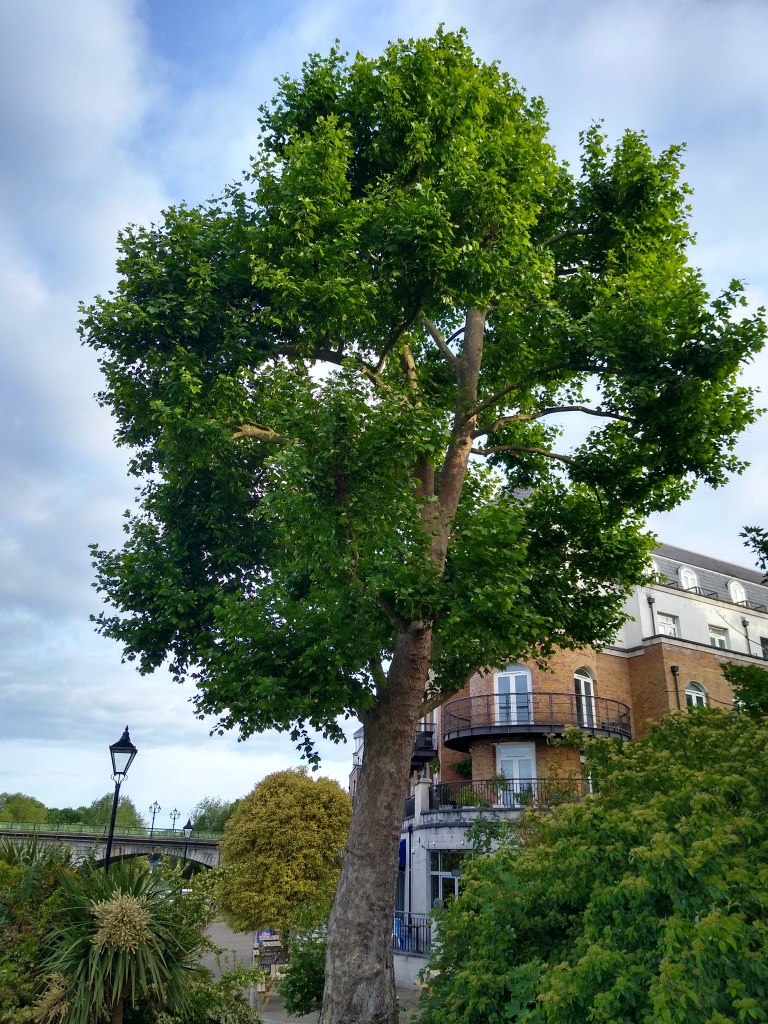
The London Plane was introduced to Britain in about 1680. It is now common in large gardens, parks and urban areas where it has proved resistant to pollution. The bark is unmistakeable, pale yellow/grey patches remain after large darker flakes fall off. This example was heavily pruned in the winter.
7. Wellingtonia
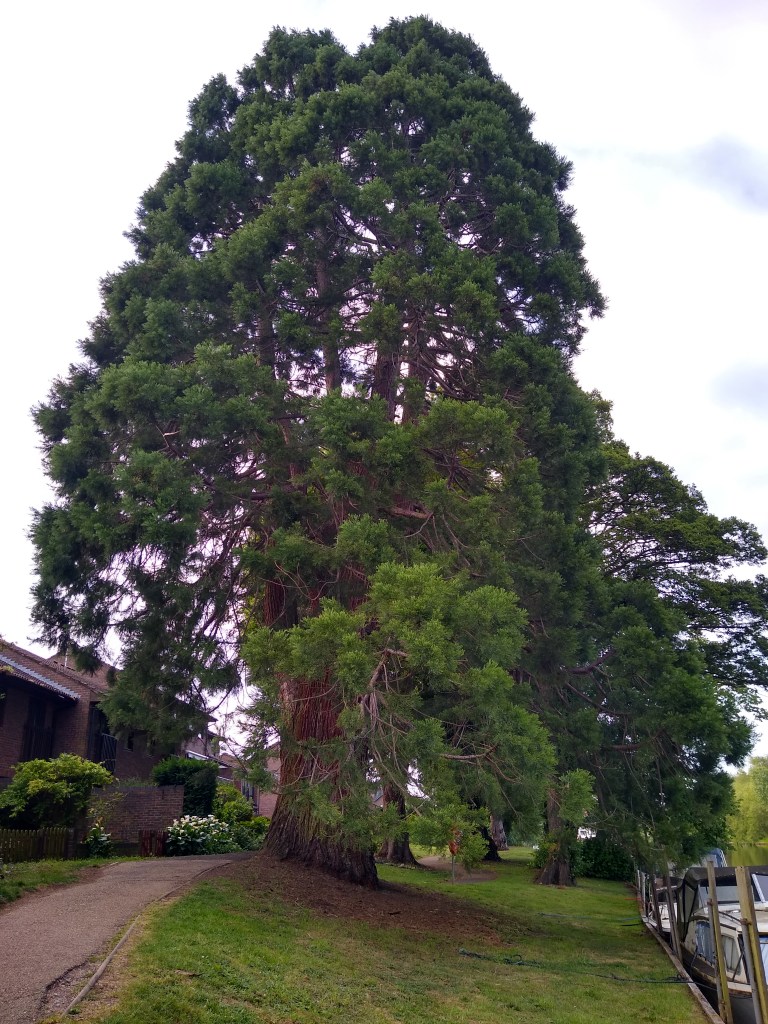
The Wellingtonia, or Giant Sequoia, is a conifer native to California. It was introduced to Britain in 1853 and some trees are already over 50m tall, but they can grow to nearly 100m and live for over 3,000 years. The very distinctive bark is red and spongy and provides a degree of resistance to fire.
8. Oak
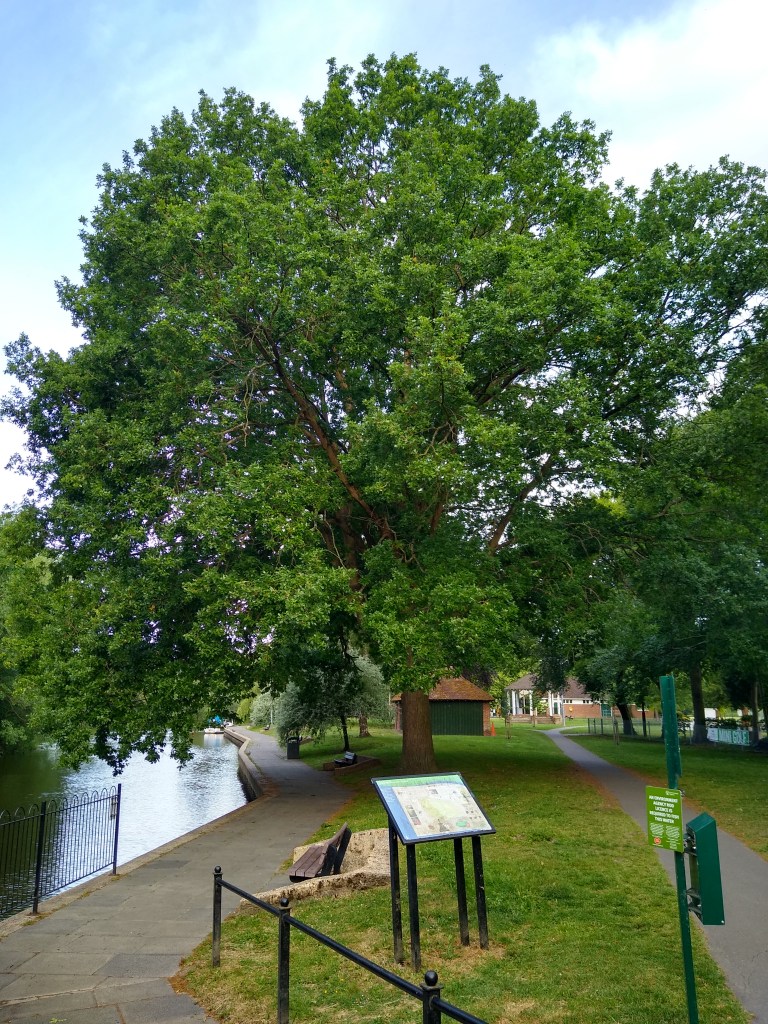
This is a relatively young oak tree. They can live for over 1,000 years and provide an important habitat for many creatures. The English Oak is the dominant tree in most of Britain. It has been planted everywhere in parks, gardens and woods. Its timber is very hard and durable, so is widely used for furniture and in buildings.
9. Copper Beech
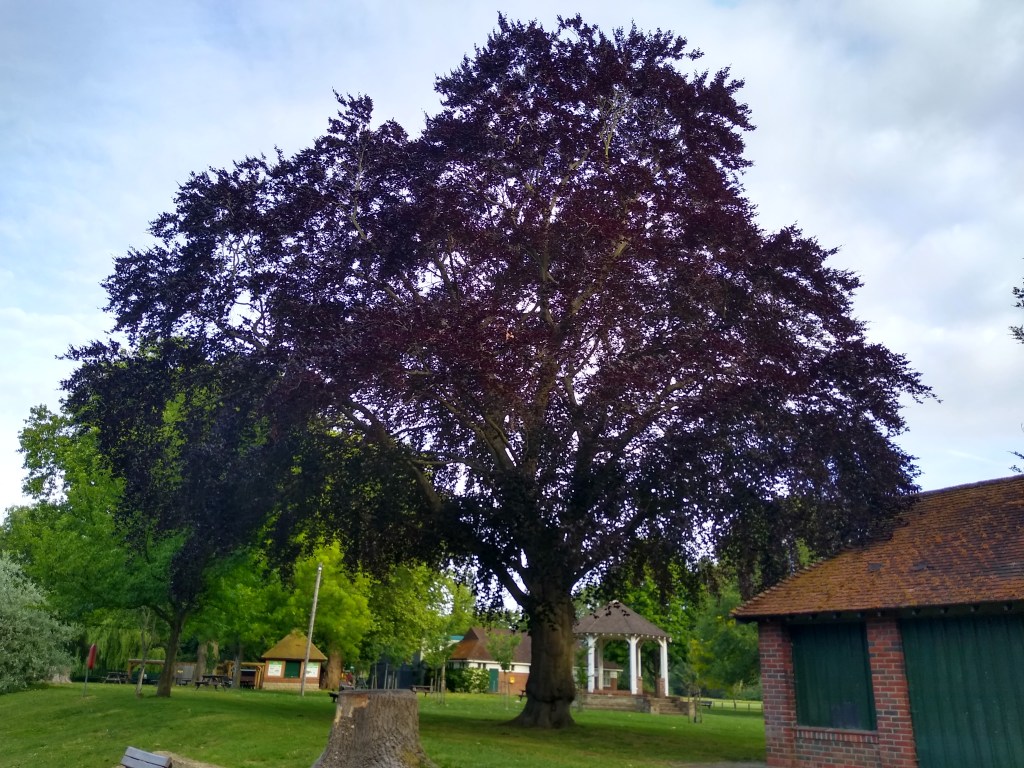
Copper beech is a cultivated form of common beech, although copper-coloured beech trees are also sometimes found in nature. It is not loved by all. The 20th century gardener Russell Page “Nothing destroys the harmony of a garden more than the dark blotch of a copper beech”.
10. Willow

This is a weeping willow, a hybrid cultivated variety of the White Willow and two other willows, called, for simplicity, ‘Tristis’ which means ‘sad’. It is common along rivers and in parks and gardens. It is one of the first willows to come into leaf, in March.
11. Poplar
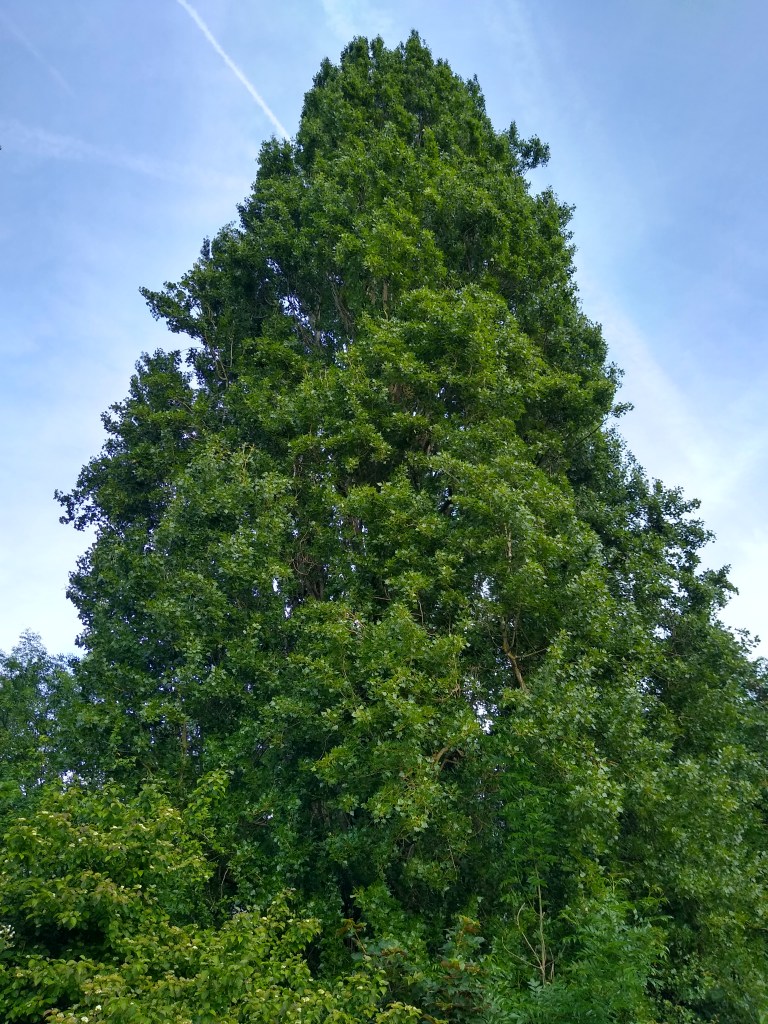
This Lombardy Poplar is a form of Black Poplar that probably came originally from Northern Italy in the 18th century but has since been planted throughout the world as an ornamental tree. It is a male tree with red catkins in spring and can reach a height of more than 30m. The branches grow almost vertically to give it its characteristic shape.
12. Ash
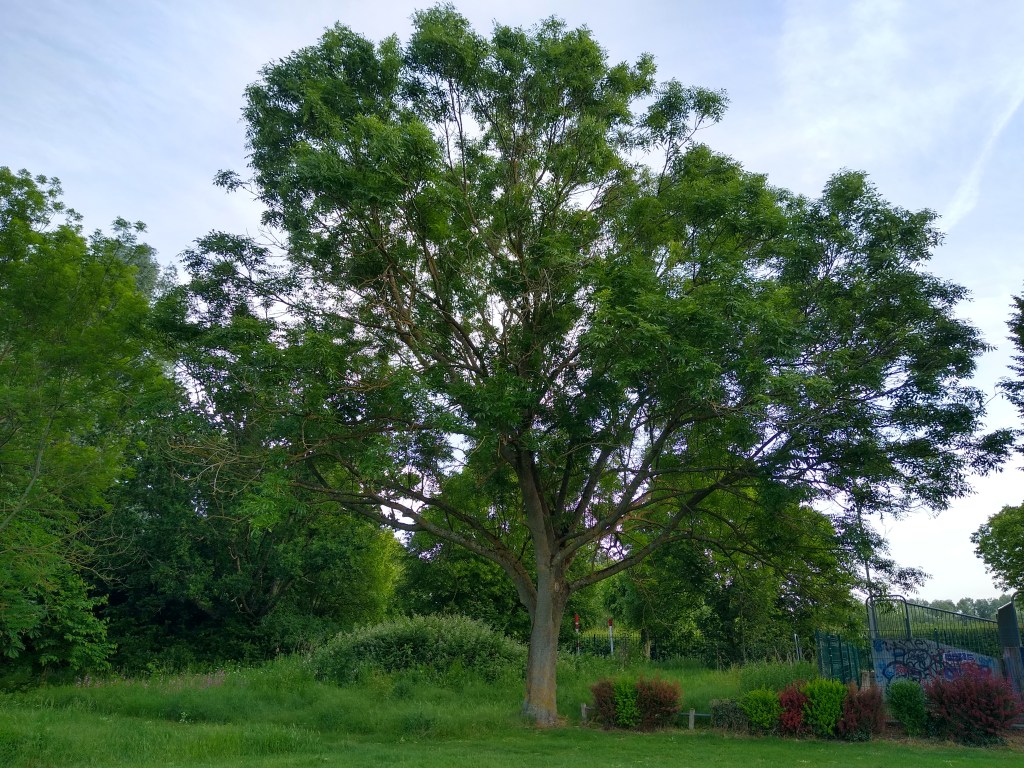
The Ash is found throughout Britain, growing naturally in woods, or planted in towns, parks and churchyards. Like many Ash trees this one has signs of the disease that causes leaf loss and crown dieback.
13. Horse Chestnut
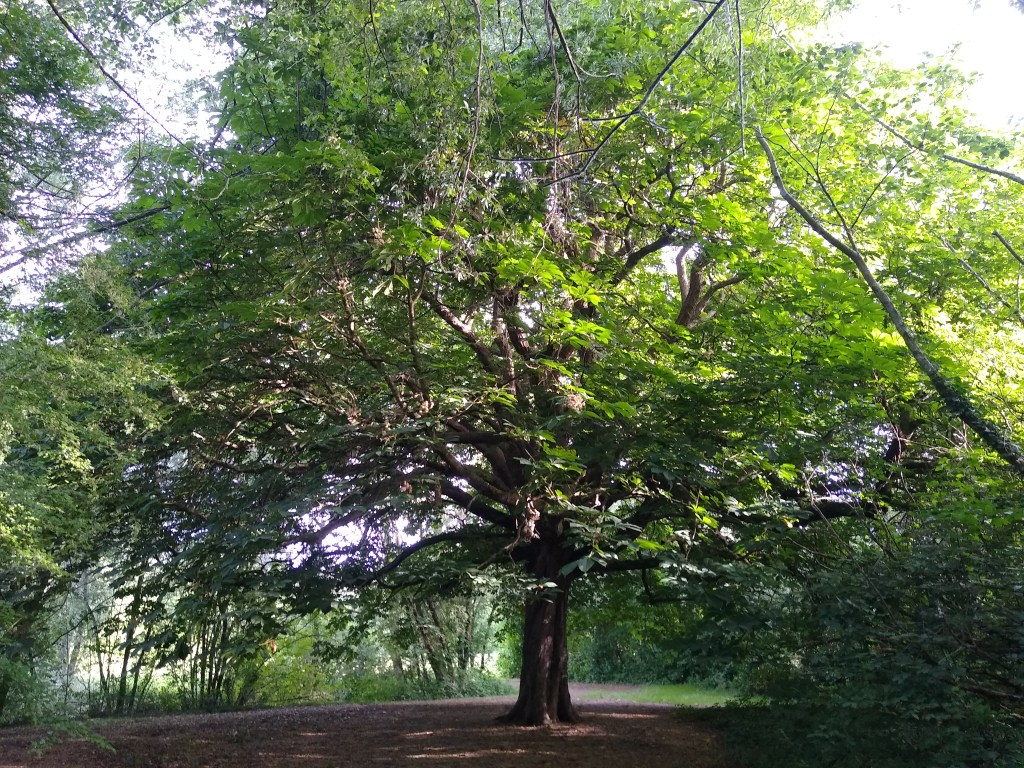
This horse chestnut achieved its natural spread before being crowded round by other trees. They were introduced to Britain in 1616. It is not related to the Sweet Chestnut, which is in a completely different botanical family.
14. Yew
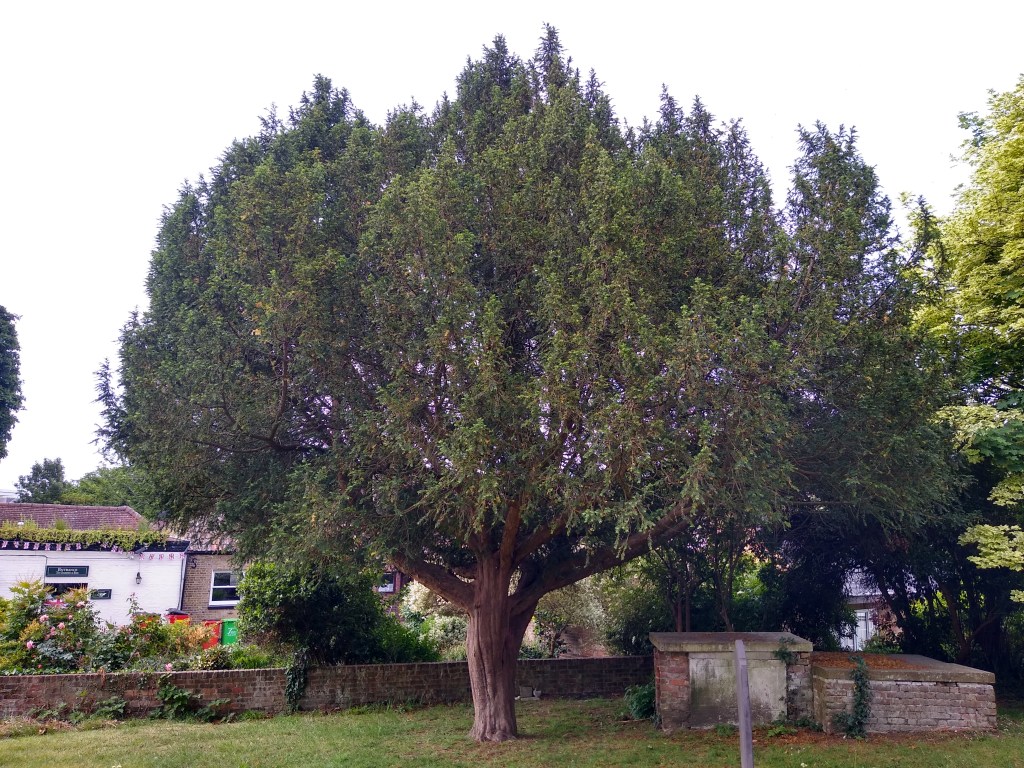
The Yew has been planted for centuries in churchyards and is also used in formal gardens and hedges. It is slow growing and long-lived and some trees are more than 1000 years old.
15. Wisteria
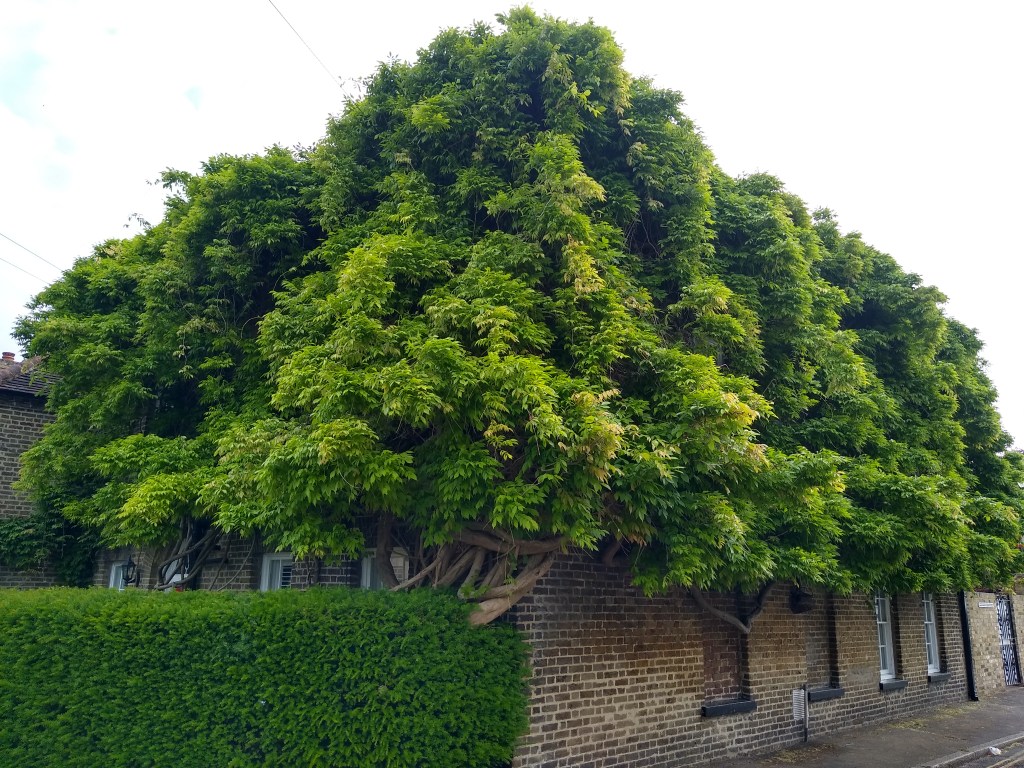
We could not resist including this, even though it is not strictly speaking a tree. The Wisteria covering the Grade II listed Corner Hall was brought from Japan and planted here in the 1870s.
Other Sources of Information about trees
 Thrive Festival